I attended the San Francisco Writer's Conference this weekend, met a lot of people, and learned plenty. I also had the unexpected pleasure and honor of falling into a hotel lobby conversation with keynote speaker
Dorothy Allison, an author who I have admired since I read
Bastard Out of Carolina soon after it was published in the '90s.
There was more at the conference to blog about than I'll ever get to, but I have to remark on an odd session on Saturday afternoon, when eight fiction editors from a mix of large New York houses and small presses introduced themselves to a crowd of some hundred or so writers and then fielded questions. There's a lot of anxious Kremlin-watching among authors and would-be authors in this era of e-books, major publisher consolidations, and mammoth bookstore chains going into Chapter 11 bankruptcy. Everybody wants to know what's next. Nobody has a clear view of the future.
The editors on the panel had a lot to say about what kinds of fiction they wanted to buy, whether authors should consider hiring a freelance editor, how self-publishing affects a book's prospects for New York publication (poorly) or a second book's prospects (a better story, depending). Good stuff, worth hearing.
Then talk turned to e-books. And here's where it got strange.
Most editors on the panel represented large New York houses. They were mostly thirty-somethings, I guessed, employed by the likes of Macmillan, Bertelsman AG, Simon & Schuster, et al. And when they answered questions about the shift in book format from paper to digital, they weren't copping to the fundamental upheaval in the industry. You can't actually blame them. They're only the tip of a huge, sinking iceberg, and they're not making decisions in the executive suites of the
Six Sisters. They can't speak publicly in contradiction to their employers' Official Line. Not if they want to keep their jobs. I'm guessing they're all polishing CVs & working out back-up plans for when the next round of pink slips are handed out. I think I would be.
So the answers to writers' questions tended toward tweaking placement of deck chairs on the Titanic.

Piracy was a big issue for these editors. One trotted out the fascinating confession that publishers are worried Amazon might underreport the number of electronic books sold, since there's no physical check or balance on the retailer's unverified assertion. What we need, the editor mused, is some kind of 'phone home' record of a digital book being unlocked by an end-user. You know, like Microsoft has been printing on their software distribution media for fifteen years.
A couple of brave writers posed more pointed questions to break open the subject behind the subject. After one editor insisted that publishers were existentially bound to Amazon, however devious and untrustworthy Jeff Bezos might be, a writer asked "Why
do you need Amazon? Couldn't publishers get out from under Amazon's thumb by setting up a distribution arm that the major New York houses can promote as a go-to destination for buying books without a middleman?"
The answers were breathtaking in their lack of inspiration. There was truth in each. But ... the pedantry!
"The beauty of Amazon," one editor said, "is that everything is there."
"Can you name ten books published by [insert name of any particular publisher here]?" asked another.
"Amazon handles the piracy issue," yet another explained.
And another was quick to imply that the Six Sisters would be busted for monopoly practices if they tried to move in lockstep.
Does any of this sound familiar? Wasn't there another media industry (hint: used to sell vinyl, then CDs) that has more or less crucified itself on the same sort of recalcitrance over new content formats and business models? I'm not claiming to have a prêt-à-porter solution to hand to NY publishers (if I did, maybe I could convince one to publish my own book and quit all the shilly-shallying around with agents and queries and whatnot).
But did anyone on the panel name alternate means to the
NY Times bestseller lists or Amazon's recommender features to refer readers to books they might like?
Goodreads?
Library Thing?
Facebook?
Book bloggers? Book tweeters? No, no one did. Of course, none of these are an instant panacea. But nurturing and promoting a diverse ecosystem of distribution and recommendation channels has to be in publishers' best interest, right? To counter the weight of big, bad Jeff Bezos?
Why not invest in doing so?
Sure, any attempt to shift the status quo will be riddled with risk, though perhaps no more risk than sinking slowly (or not) into the tar pit of literary history. No, I don't understand the publishing business one one-thousanth as well as the least knowledgeable editor on that panel. I'm not a good businessperson in the first place. Yes, I get that Bezos has a lot of publishers by the short hairs because Amazon is a distribution channel that
must be reckoned with. Yet it doesn't take Warren Buffett to see that publishers are taking refuge in sand castles as a tidal wave approaches.
Here's what editor
Jennifer Joseph of of
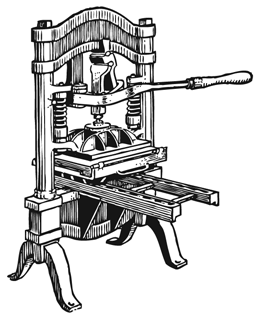
Manic D Press, also included in the panel, said of the publishing industry on Saturday: "This is the most revolutionary time since Gutenberg invented the printing press." Here's something else she said: "We're trying to fit great literature into a different way of living" [i.e., into a way of living that increasingly fails to make time or attention for books].
And what did Dorothy Allison say in her keynote the day before? In her slow Southern drawl she told the room that "publishing ain't dead." Allison was looking at the big picture, considering the simple truth that
everything changes. She spoke of attending an historians' conference decades ago, before all the intertubes were fully screwed together, and hearing the academics describe changes coming down the pike exactly like the ones we're experiencing now. As she put it, "historians think long." But just because publishing is changing doesn't mean it's finished. At least not for those who adapt to its evolution.
Jennifer Joseph and Dorothy Allison -- seasoned women who have been around the block more than a time or seven -- sounded like they were grappling with things that are actually happening. Certainly more so than most of the editors representing their very large, very slow-to-respond publishing houses. Or so it seems from the oblique angle this writer has on the industry.
I have nothing against very large publishing houses. I don't think paper books are going away. I would like to see my work published by one of the New York houses sooner than later. But it's not confidence-inspiring when editors from the Six Sisters pretend they're dealing with a little brush fire burning in the far corner of Podunk ... when everybody can see that the brush fire is an inferno and it's burning in the heart of literary New York.
Thanks to wwphotos for the image of Jeff Bezos from the photographer's flickr stream.




 Posts
Posts

